The study and practice of safety tacitly assumes that we know how things are done or should be done. Since humans are supposed to follow procedures, rules, and guidelines, accident investigation and risk assessment alike assume that compliance will always lead to successful outcomes. The purpose of safety analyses is consequently to understand why the outcome of an action or a series of actions (such as riding a motorcycle) was unacceptable (adverse) rather than acceptable (successful) – as in event investigation – or how that could possibly happen in the future – as in risk assessment.
In reality riding a motorcycle is never completely regular or orderly, except in very special cases. It is therefore inadvisable to assume that the riding task is as we imagine and that compliance guarantees success. Work-as-done will always be different from work-as-imagined because it is impossible to know in advance what the actual conditions experienced by a rider will be, not least what the demands and the resources will be, which means that it is impossible to provide instructions that are detailed enough to be followed ‘mechanically.’ A safety analysis must therefore begin by establishing how riding is actually done, how everyday performance takes place, and how things go right, as a prerequisite for understanding what has or could go wrong.
The reason why everyday performance nevertheless in most cases goes right is that people know or have learned to adjust what they do to match the actual conditions, resources, and constraints – for instance by trading off efficiency and thoroughness. The adjustments are ubiquitous and generally useful. But the very reasons that make them necessary also means that they will be approximate rather than precise. Approximate adjustments are the reason why things usually go right, but by the same token also the reason why things occasionally go wrong. Things do not generally go wrong because of outright failures, mistakes, or violations. They rather go wrong because the variability of everyday performance aggregates in an unexpected manner.
Whenever something is done, the intention is always to do something right and never to do something wrong. For each action, the choice of what to do is determined by many different things, including competence, understanding of the situation, experience, habit, demands, available resources, and expectations about how the situation may develop – not least about what others may do. If the expected outcome is obtained, the next action is taken, and so on. But if the outcome is unexpected, then the preceding action is re-evaluated and classified as wrong rather than right, as an error or as a mistake, using the common but fallacious post hoc ergo propter hoc argument (since event Y followed event X, event Y must have been caused by event X). With hindsight, it is pointed out what should have been done, if only people had made the necessary effort at the time. The whole argument is, however, unreasonable because the action was chosen based on the expected rather than the actual outcome. Failures and successes are equivalent in the sense that we can only say whether the preceding action was right or wrong after the outcome is known. That changes the judgement of the action, but not the action itself.

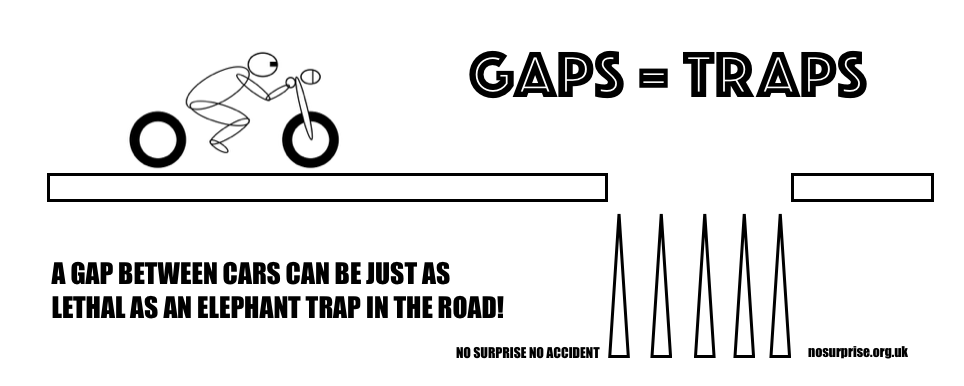
 No Surprise - No Accident